Monsoon-Proofing Your Pool in Hyderabad
Hyderabad's monsoon season — typically June through September — brings heavy rainfall, strong winds, and dramatic temperature shifts that can wreak havoc on an unprepared swimming pool. Telangana receives an average of 800–900 mm of rainfall annually, with the bulk concentrated in just four months. Without proper preparation, monsoon rains dilute water chemistry, introduce debris and contaminants, overload filtration systems, and can even cause structural damage.
At Dream Pools, we help pool owners across Hyderabad prepare for and manage the monsoon season. Here is our comprehensive guide to keeping your pool safe, clean, and ready for use throughout the rainy months.
Pre-Monsoon Preparation Checklist
Start preparing your pool two to three weeks before the monsoon typically begins in Hyderabad (usually early to mid-June):
- Deep clean the pool: Brush all surfaces, vacuum the floor, and clean the waterline tiles thoroughly. Starting the monsoon season with a pristine pool makes ongoing maintenance much easier.
- Service all equipment: Have your pump, filter, heater, and automation system inspected and serviced. Replace worn gaskets, seals, and o-rings before they fail during heavy use.
- Clean and inspect drains: Ensure all overflow drains, deck drains, and surrounding drainage channels are clear of leaves, soil, and debris. Poor drainage around the pool can cause flooding and soil erosion.
- Trim surrounding trees: Cut back overhanging branches that will drop leaves and debris into the pool during storms. Hyderabad's neem, gulmohar, and tamarind trees are particularly heavy shedders during monsoon.
- Stock up on chemicals: Ensure you have adequate supplies of chlorine, pH adjusters, algaecide, and shock treatment. You will use more chemicals during monsoon than any other season.
- Inspect and prepare your pool cover: If you have a pool cover, check it for tears, weak spots, and proper fit. A good cover is your best defence during heavy rains.
- Balance water chemistry: Superchlorinate and balance all parameters before the rains begin. Start with slightly elevated chlorine levels (3.0–4.0 ppm) as a buffer against dilution.
During Monsoon: Ongoing Maintenance
Active maintenance during the monsoon prevents small issues from becoming expensive problems:
- Cover the pool during heavy rain: A solid pool cover prevents rainwater from diluting your carefully balanced chemistry and keeps debris out. Even a simple tarpaulin cover is better than nothing.
- Test water chemistry after every major rainfall: Rainwater is acidic (pH 5.0–5.5), which lowers your pool's pH and alkalinity. Test and adjust within 24 hours of significant rain.
- Run the filtration system longer: Increase pump run time by 2–4 hours during the monsoon to compensate for increased organic load from windblown debris and rainwater contaminants.
- Skim the surface daily: Leaves, twigs, insects, and other debris accumulate rapidly during monsoon. Skim at least once daily — twice if your pool is near trees.
- Shock the pool weekly: A weekly shock treatment (superchlorination) prevents algae from gaining a foothold during the warm, wet conditions that algae thrive in.
- Monitor water level: Heavy rains can overfill your pool, putting stress on the overflow system and potentially flooding the deck area. Use the pool's overflow drain or pump out excess water if needed.
- Watch for algae: Green or cloudy water is the first sign. At the first hint of discolouration, brush the pool, shock heavily, and run the filter continuously until clear.
Water Chemistry During Heavy Rains
Rainwater dramatically affects pool chemistry in several ways:
- pH drops: Rainwater is acidic and will lower your pool's pH. After heavy rains, test pH immediately and add soda ash or sodium bicarbonate to bring it back to the 7.2–7.6 range.
- Alkalinity drops: Rain dilutes total alkalinity, making pH more volatile. Maintain alkalinity at 80–120 ppm for stable chemistry.
- Chlorine dilution: Every rainfall reduces your free chlorine concentration. Maintain higher-than-normal chlorine levels (2.0–4.0 ppm) throughout monsoon.
- Phosphate increase: Rainwater carries phosphates from dust, fertilisers, and organic matter. Elevated phosphates feed algae growth. Use a phosphate remover if levels exceed 500 ppb.
- TDS increase: Total dissolved solids accumulate as rainwater introduces minerals and contaminants. If TDS exceeds 1500 ppm, partial water replacement may be necessary.
Pool Covering Options for Hyderabad
Investing in a proper pool cover is the single best monsoon protection strategy:
- Automatic rigid covers: The premium option — motorised covers that deploy at the touch of a button. They prevent debris entry, reduce chemical dilution, and can support the weight of standing water.
- Manual safety covers: Durable mesh or solid covers that are stretched across the pool and anchored at the deck. More affordable than automatic systems and highly effective.
- Solar covers (bubble covers): While primarily for heat retention, these lightweight covers also reduce rainwater dilution and debris entry. They are the most budget-friendly option.
- Custom-fitted tarpaulins: A practical option for larger pools, especially farmhouse pools in areas like Shamshabad and Shankarpally where pool sizes are generous.
Drainage Solutions
Proper drainage around your pool is critical during Hyderabad's monsoon:
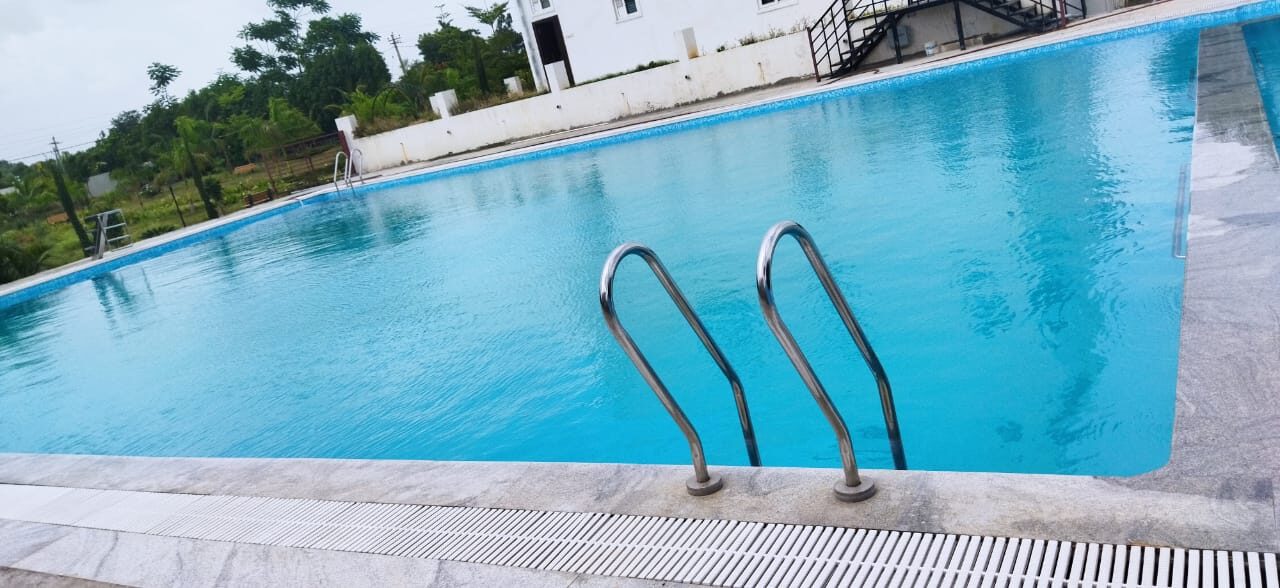
- Deck drainage: Channel drains or slot drains around the pool perimeter prevent standing water on the deck and direct runoff away from the pool.
- Landscape grading: The ground surrounding the pool should slope away from the pool to prevent surface water from flowing into it.
- French drains: Subsurface drainage systems manage groundwater pressure during extended rainy periods, preventing structural stress on the pool shell.
- Overflow management: Ensure your pool's overflow system can handle the volume of a heavy Hyderabad downpour — our designs account for peak rainfall rates specific to Telangana.
Post-Monsoon Cleanup
Once the rains subside (typically by early October in Hyderabad), give your pool a thorough restoration:
- Drain and clean the pool cover before storing it
- Deep brush all pool surfaces, paying special attention to corners and steps where algae hides
- Perform a comprehensive water test and rebalance all chemical parameters
- Inspect and service all equipment — pumps, filters, heaters, and automation systems
- Check for any tile damage, grout erosion, or coping cracks caused by moisture expansion
- Clear all drainage channels and deck drains of accumulated debris
Need help preparing your pool for monsoon season in Hyderabad? Dream Pools offers seasonal maintenance packages that include pre-monsoon preparation, weekly monsoon care visits, and post-monsoon restoration. Get a free maintenance quote or contact us today.