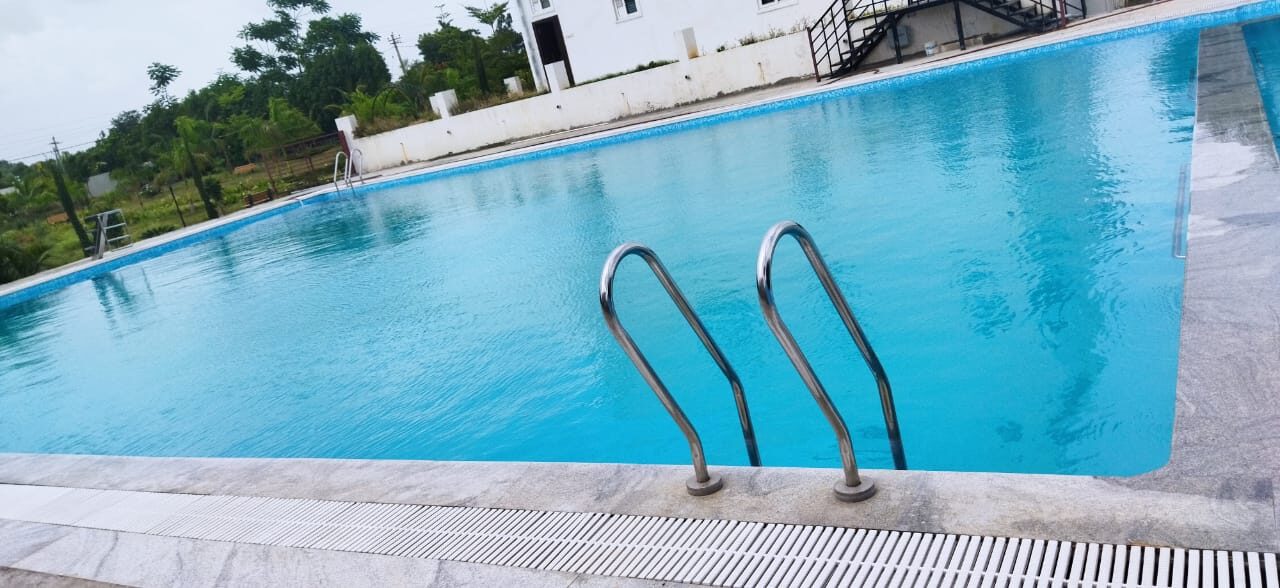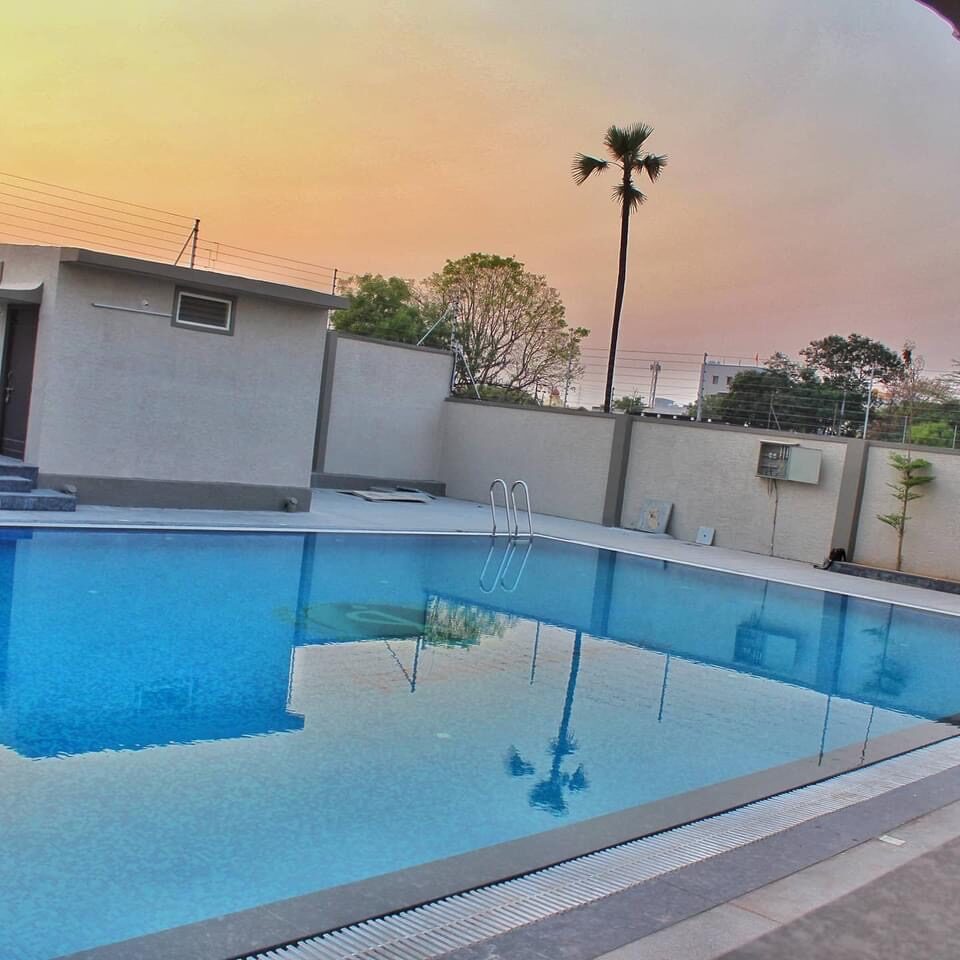
Two pools built to identical specifications can age very differently, and the reason is often the water put into them. Bore water across much of Hyderabad and the surrounding districts tends to be hard, meaning high in dissolved calcium and magnesium. Fill a pool with it, let summer evaporation concentrate it further, and the consequences show up on the tile line within a season.
This is one of the most common avoidable problems we are called about, and it is almost entirely a matter of testing early and managing deliberately.
What hard water actually does to a pool
- Scale on tile and coping — a chalky white or grey crust at the waterline, rough to the touch, that resists ordinary brushing
- Cloudy water that will not clear — calcium coming out of solution, often mistaken for a filtration or sanitiser problem and treated with more chemicals, which does not help
- Scaled heater elements and heat exchangers — scale is a poor conductor, so the heater works harder, costs more to run, and fails earlier
- Ruined salt chlorinator cells — the cell plates scale over and stop producing chlorine. This is the single most expensive and most frequent casualty
- Rough plaster and stained surfaces — uncomfortable underfoot and difficult to reverse once established
Crucially, evaporation makes this worse over time. Water leaves as vapour; the minerals stay behind. A pool topped up all summer from a hard source becomes progressively harder unless you intervene.
Test before you fill, not after
Before the first fill, have your intended water source tested. The numbers that matter for pool use:
- Calcium hardness — the direct measure of scaling potential. For a tiled or plaster pool the widely used target range is roughly 200 to 400 ppm. Below that, water becomes aggressive and can attack grout and plaster; well above it, scaling risk rises sharply.
- Total dissolved solids (TDS) — everything dissolved in the water. High TDS dulls water clarity and reduces sanitiser effectiveness. Note that saltwater pools run high TDS by design, so the meaningful figure there is TDS excluding the added salt.
- pH and total alkalinity — these govern whether dissolved calcium stays in solution or deposits. Alkalinity is typically held around 80 to 120 ppm, with pH in the 7.2 to 7.6 band.
The balance that actually matters
Scaling is not decided by hardness alone. It is the interaction of calcium hardness, pH, alkalinity and temperature, expressed in the industry as the Langelier Saturation Index. Positive means the water tends to deposit scale; negative means it tends to be corrosive; near zero is balanced.
The practical consequence: you can often keep hard water usable by holding pH at the lower end of the acceptable range and keeping alkalinity controlled, rather than by attacking the hardness itself. A competent maintenance routine treats these together, not as separate readings.
Fixing it: five approaches
- Choose a better fill source. The cheapest fix is not filling with the hardest water available. If municipal or tanker water tests substantially softer than your bore, use it for the initial fill and for top-ups, and keep the bore as backup.
- Partial drain and refill. The only reliable way to lower calcium hardness in an existing pool is to remove some of the water and replace it with softer water. Dilution is the mechanism. This is a periodic correction, not a weekly one.
- Sequestrants (scale inhibitors). These hold minerals in solution so they cannot deposit. They are genuinely useful, but they are a management tool rather than a cure, and they deplete, so they need regular redosing.
- Treat the fill water. For sites where the bore is the only realistic option, treating water at the point of fill, whether through softening or RO, prevents the problem entering the pool at all. It is the highest upfront cost and the lowest ongoing hassle.
- Keep the chemistry balanced, continuously. Most scaling we see is not from extraordinary water. It is ordinary hard water plus pH left to drift upward for months.
If you are running a salt chlorinator
Salt systems and hard water need particular care. The cell generates chlorine by electrolysis, and the plate surface is exactly where calcium likes to deposit. Most modern cells reverse polarity periodically to shed scale, but that self-cleaning has limits and it cannot compensate for badly balanced water.
If you are on hard water and want a salt pool, budget for it properly: keep pH firmly controlled, inspect the cell on a schedule rather than when chlorine output drops, and clean it as directed by the manufacturer rather than improvising. A cell replaced every couple of years because of neglected chemistry is an expensive way to run a pool. Our saltwater versus chlorine comparison covers the wider trade-offs.
Design decisions that reduce the problem
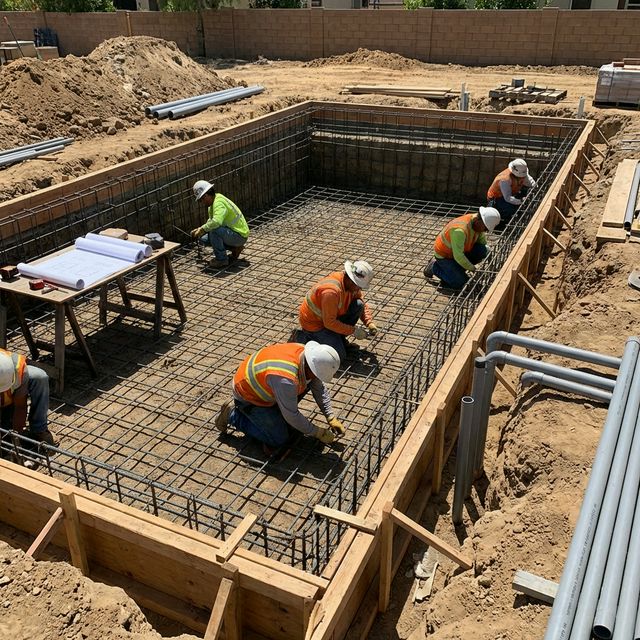
Some of this is settled before the pool is built:
- Surface finish. Fully tiled surfaces are easier to descale than plaster, and darker grouts show deposits less while still needing the same care.
- A cover reduces evaporation, which directly slows the concentration of minerals, on top of the water savings covered in our pool water requirement guide.
- Accessible equipment. A plant room where the cell, filter and heater can actually be reached is the difference between maintenance that happens and maintenance that gets postponed.
The short version
Test your water before you fill. Know your calcium hardness. Hold pH and alkalinity in range rather than chasing problems after they appear. And if your only source is hard bore water, decide upfront whether you are treating it at the inlet or managing it in the pool, because doing neither is what produces the scaled tile line and the dead salt cell.
Every Dream Pools maintenance plan includes regular water testing and balancing as standard. If your pool is already scaling, get in touch and we will assess the water and the surfaces and tell you honestly what is recoverable.