Choosing the Right Pool Shape for Your Home
The shape of your swimming pool affects everything — how it looks, how it functions, how much it costs, and how it fits into your available space. While the options might seem overwhelming, each shape has distinct advantages that make it ideal for specific situations.
At Dream Pools, our design team has built pools in every shape imaginable across Hyderabad and Telangana. Here is our comprehensive guide to the most popular pool shapes for Indian homes, complete with honest pros and cons to help you make the best choice.
1. Rectangular Pools
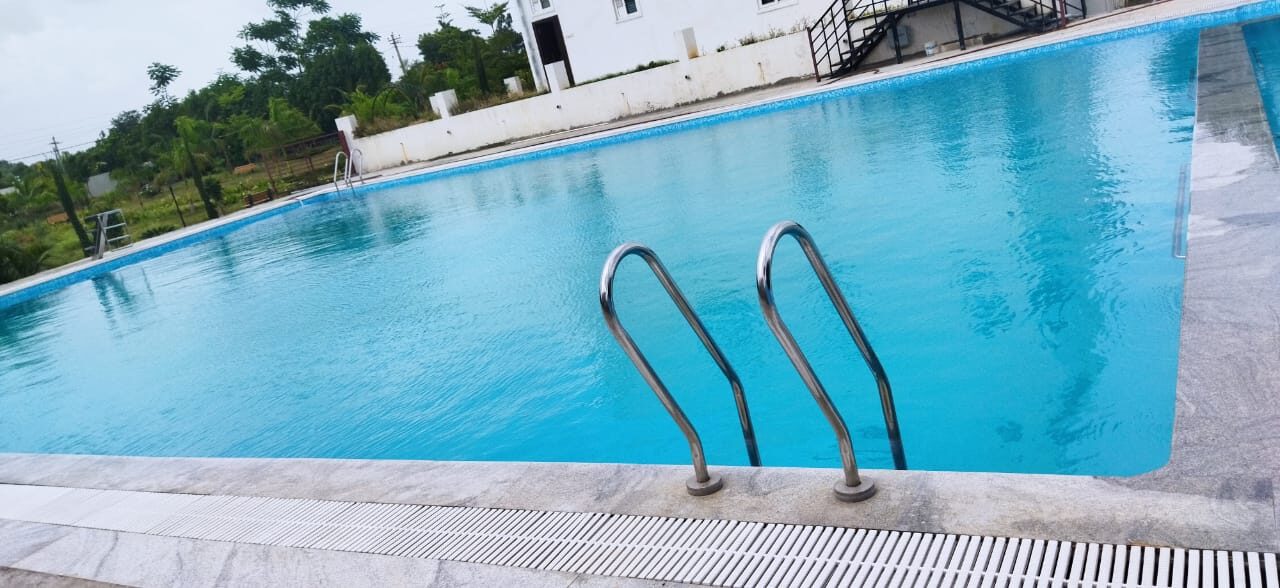
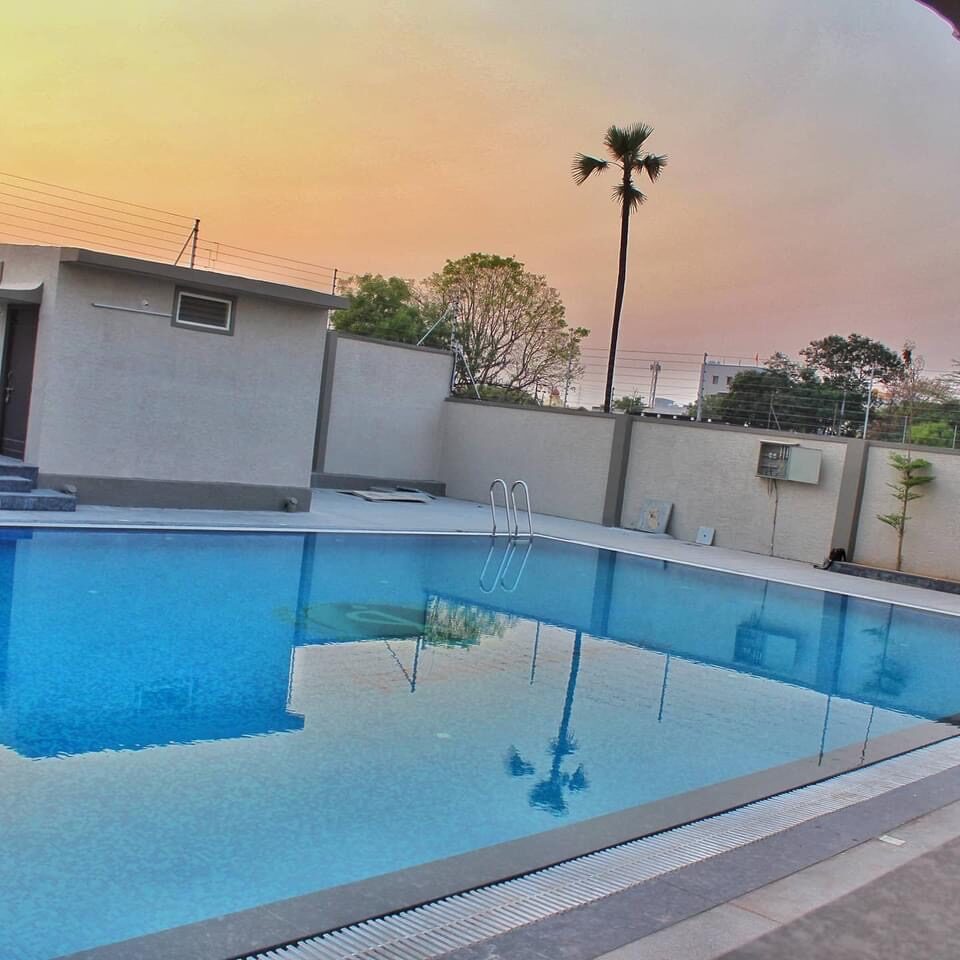
The classic rectangle remains the most popular pool shape worldwide, and for good reason.
Best For
- Lap swimming and fitness
- Modern and contemporary home architecture
- Maximising swimming area within a given footprint
- Properties with straight boundary walls
Pros
- Clean, elegant lines that complement modern Indian homes
- Most efficient shape for swimming laps (see our lap pool design guide)
- Easier to cover with automatic pool covers for safety and heat retention
- Lower construction cost per square metre due to simple formwork
- Easy to calculate water volume for chemical dosing
Cons
- Can look rigid in natural or landscaped garden settings
- Less interesting visually compared to curved shapes
- Sharp corners can be uncomfortable for young children
Typical Sizes
Small: 6m x 3m | Medium: 10m x 4m | Large: 15m x 6m
2. Kidney-Shaped Pools
The kidney shape is one of the most recognisable pool designs and remains a favourite across Indian homes.
Best For
- Families with children (no sharp corners)
- Natural and tropical garden settings
- Properties with irregular or curved landscaping
Pros
- Organic, flowing shape that blends beautifully with landscaping
- The indented curve naturally separates deep and shallow areas
- No sharp corners — safer for children and easier for pool covers
- Creates interesting deck space in the curve of the kidney
Cons
- Not ideal for serious lap swimming
- Slightly higher construction cost due to curved formwork
- Harder to fit automatic safety covers
3. L-Shaped Pools
The L-shape is perfect for homeowners who want distinct zones within a single pool.
Best For
- Families wanting separate areas for adults and children
- Properties with corner plots or L-shaped gardens
- Combining a lap lane with a leisure area
Pros
- Natural separation between a long swimming lane and a wider recreational area
- Different depths in each section — shallow for kids, deeper for adults
- Fits corner plots and awkward spaces that other shapes cannot
- Impressive visual impact from elevated viewpoints
Cons
- Requires more plumbing (additional returns and drains for good circulation)
- Higher construction cost compared to simple rectangles
- Complex pool cover solutions needed
4. Freeform Pools
Freeform pools have no fixed geometry — they flow with natural, organic curves that mimic natural water bodies.
Best For
- Luxury farmhouse properties in areas like Shamshabad and Shankarpally
- Tropical and resort-style landscaping
- Homeowners wanting a unique, one-of-a-kind design
Pros
- Completely unique — no two freeform pools look alike
- Can incorporate rock features, waterfalls, grottos, and beach entries
- Blends naturally with landscaping and natural stone surroundings
- Can be designed around existing trees, rocks, or terrain features
Cons
- Highest construction cost due to complex curves
- Not suitable for lap swimming
- More difficult to maintain and clean (irregular shapes create dead spots)
- Impossible to fit standard pool covers
5. Geometric Pools (Hexagonal, Octagonal, Circular)
Geometric pools use mathematical shapes to create striking visual statements.
Best For
- Feature pools or plunge pools
- Compact spaces where a rectangle would look too conventional
- Contemporary architecture with angular design elements
Pros
- Strong architectural statement that becomes a centrepiece
- Circular pools work beautifully as plunge pools
- Can be elevated or sunken for dramatic effect
Cons
- Limited swimming functionality
- Custom formwork increases cost
- Smaller usable swim area compared to rectangles of similar footprint
6. Roman and Grecian Pools
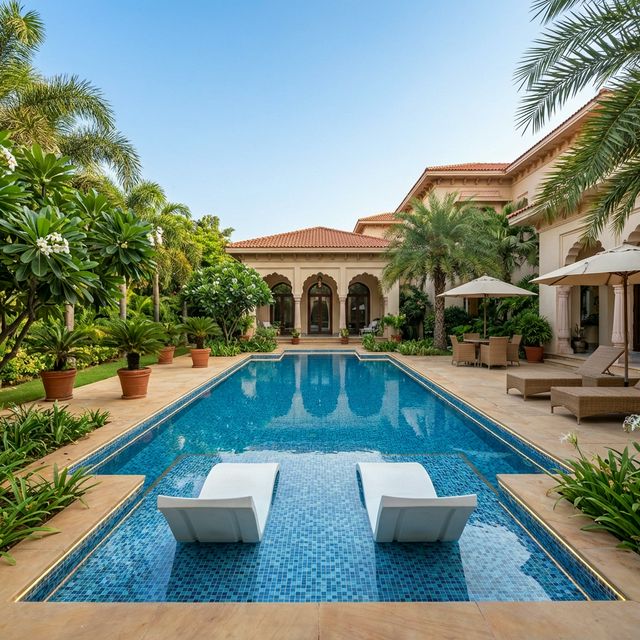
These classical shapes feature a rectangular body with rounded ends (Roman) or notched corners (Grecian).
Best For
- Homes with classical or Mediterranean architecture
- Homeowners wanting elegance without full freeform complexity
- Properties with formal gardens
Pros
- Timeless elegance that never looks dated
- The rounded or notched ends add visual interest while maintaining a largely rectangular swim area
- Works well with formal landscaping, columns, and pergolas
Cons
- Rounded ends reduce effective lap swimming length
- Slightly more expensive than pure rectangles
7. Figure-8 Pools
Two connected circles or ovals create a distinctive hourglass shape.
Best For
- Dual-purpose pools with distinct zones
- Homes wanting a hot tub connected to the main pool
- Properties with wide but shallow garden spaces
Pros
- Natural separation between a relaxation zone and an activity zone
- One side can be heated as a warm plunge while the other stays cool
- Visually distinctive and conversation-starting
Cons
- The narrow waist limits water circulation — requires careful plumbing design
- Not practical for lap swimming
- Complex construction
How Dream Pools Helps You Choose
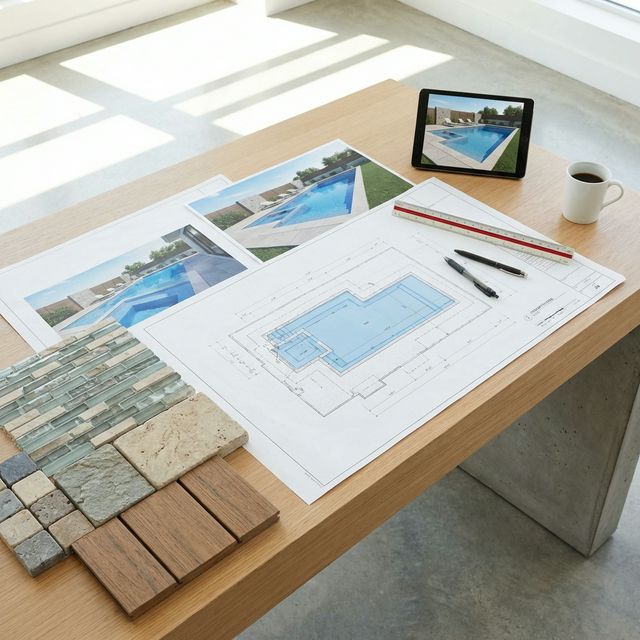
Selecting the right pool shape is not just about aesthetics — it is about how you will use the pool, who will use it, and how it interacts with your property's architecture and landscape. Our design process includes detailed 3D visualisations showing multiple shape options on your actual property, so you can compare before committing.
Request a free design consultation and our team will recommend the best shape for your space, budget, and lifestyle. We will show you exactly how each option looks with a realistic 3D render.